A companion for learners of Cymraeg
Make the Welsh from your course stick
Learning Welsh is a real skill and, for many of us, a real connection: to family, to a place, to people. Your course and your teacher do the teaching. Flashcards Cymraeg helps their words stay with you.
- ✓Turn your course's vocabulary into flashcards from a photo
- ✓See every word in real sentences, explained word by word
- ✓Practise little and often, and review at the right time
In closed beta: sign up with an access code for free access while we get ready.
Your word, in a real sentence
Dw i wedi colli fy nghath.
I've lost my cat.
Your course teaches you Welsh. This helps it stick.
Taught by real people
Courses like Dysgu Cymraeg, GCSE and A-Level Welsh, evening classes and private tutors are written and taught by people. Flashcards Cymraeg works with the words from your course. It doesn't replace it.
A skill, and a connection
Whether you're reconnecting with family roots, moving to Wales or just love the language, learning Welsh is something you do, not something an algorithm does for you.
AI for the fiddly bits only
We use AI to read a photo of your vocabulary list, write practice sentences and explain the grammar in them, so your time goes on learning, not typing.
More than a flashcard
See why the word changes
Most flashcard apps show you a word and its translation. But Welsh words change: cath becomes gath, chath or nghath depending on what comes before it.
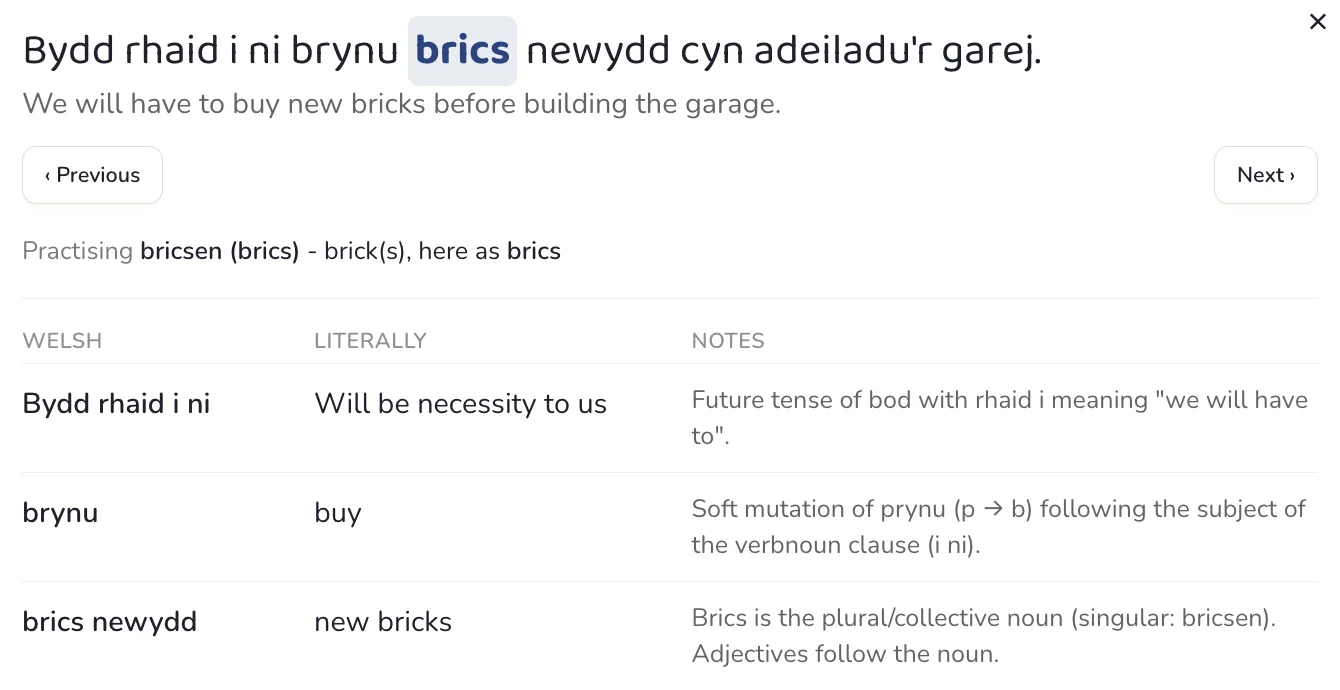
So every word you add can be seen at work in example sentences, written for your level (from Mynediad to Gloywi) and in your dialect. Tap any sentence for a word-by-word breakdown: what each part means, and which mutation is happening and why.
- • Sentences for every word in a deck, in one go
- • Ask for what you're practising: "the past tense", "questions", "Baswn i'n…"
- • Explanations are saved, so you can come back to them
How it fits around your course
1
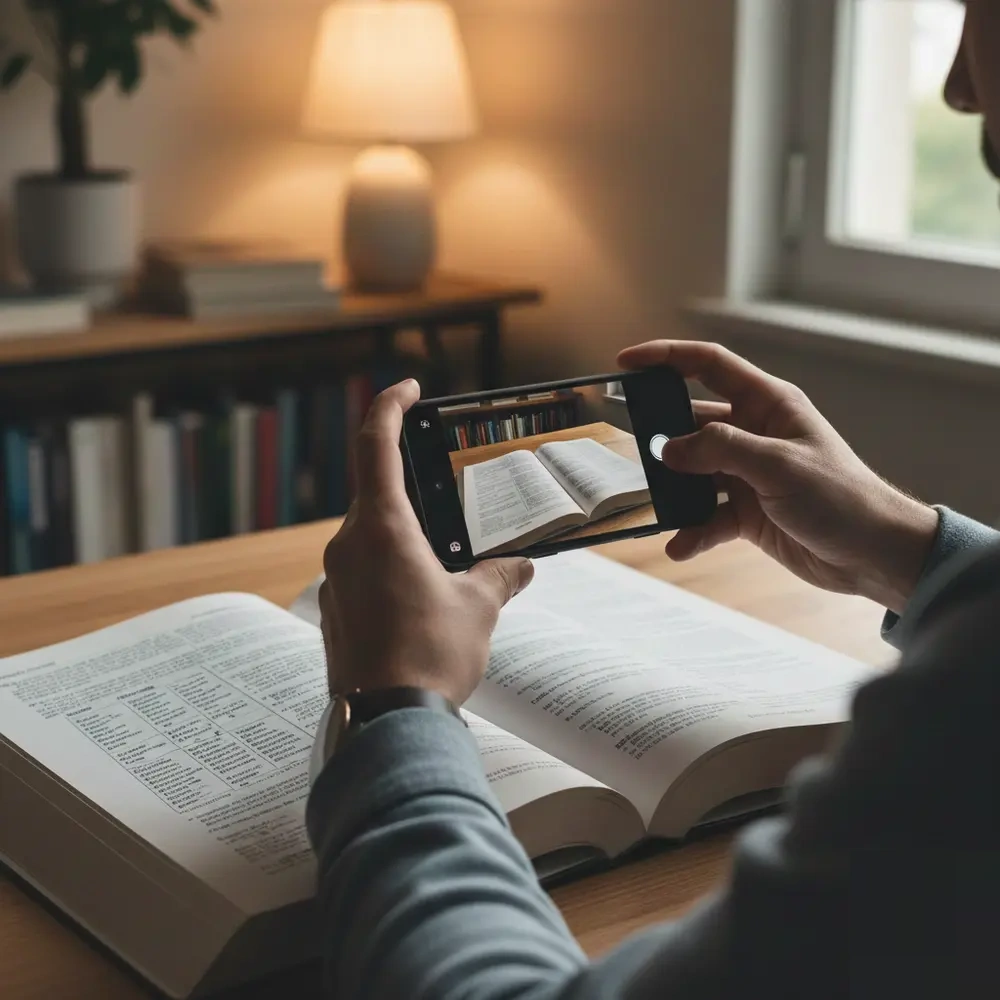
Add the words from your lesson
Take a photo of the vocabulary table in your coursebook, or paste a screenshot. The words appear in a deck, ready to check.
2
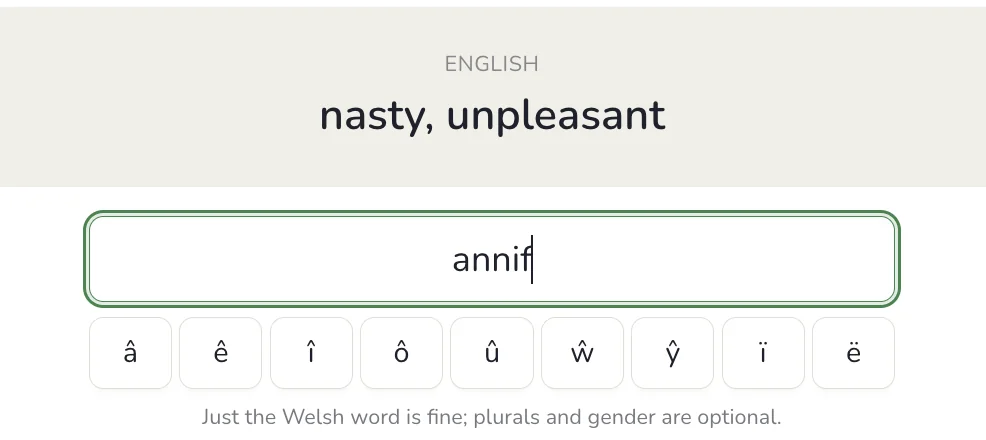
Learn them, then keep them
A short drill takes you from seeing a word to typing it from memory. Tests then bring each word back just before you'd forget it.
3
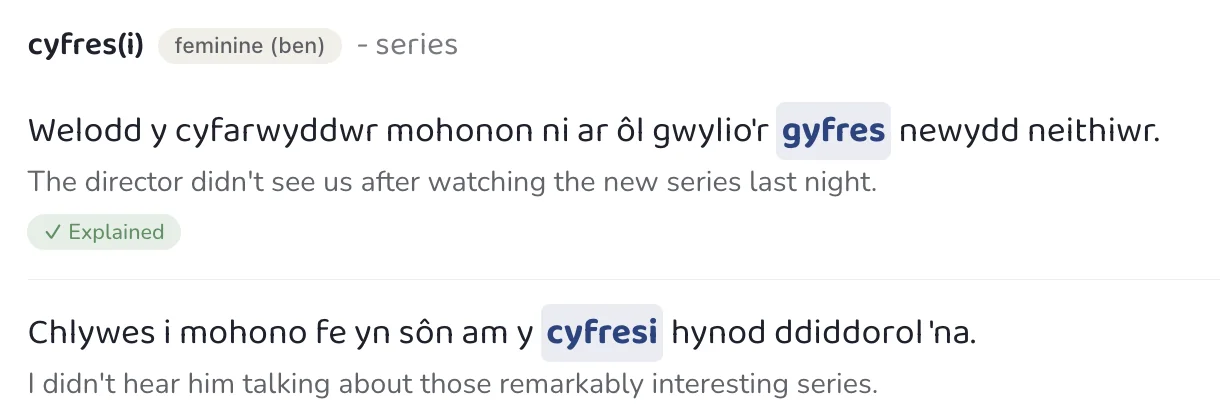
See them in real Welsh
Read your words in example sentences, and tap one for the grammar behind it, in the time you have between lessons.
Made for Welsh, not adapted to it
Mutations, explained
Soft, nasal and aspirate, shown where they happen, with the reason.
North or South
Sentences in the Welsh you're learning: gyda fi or gen i, your course's way.
Your level
Mynediad, Sylfaen, Canolradd, Uwch or Gloywi, with sentences pitched to match.
â ê î ô û ŵ ŷ
The letters your keyboard hides, one tap away when you type your answers.
Free for everyone, no account needed
Welsh mutations: a quick guide
Which letters change, the words that cause soft, nasal and aspirate mutation, and the exceptions that catch everyone out, like y llaw, not y law.
For tutors and teachers
Flashcards Cymraeg is practice between lessons, not a replacement for them. Learners bring the words you teach, in the order you teach them, and come back to class having actually remembered them. There are no ads, and learners' data is never sold. If you think it would help your learners, we'd be delighted if you passed it on.
Our free Welsh resources (quick guides, and other places to learn) are open to anyone. You're welcome to point your learners to them.
A few questions
Does it work with my course?
Yes. It uses the words from whatever you're studying: Dysgu Cymraeg (Mynediad to Gloywi), GCSE or A-Level Welsh, a class, a tutor or a book. If you can photograph the vocabulary list, or type it in, it works.
Will it teach me Welsh?
No, and it isn't trying to. Your course and your teacher do that. This helps the vocabulary you meet there stick, and shows how it's used.
How is AI used?
Only for three jobs: reading a photo of your vocabulary list, writing example sentences, and explaining the grammar in them. It can make mistakes, so you can edit any word or sentence. Studying itself involves no AI at all.
What does it cost?
It's designed to be low-cost: studying is included, and only the AI helpers use your balance. Typical costs are in the FAQ.
Pob lwc gyda'r dysgu
Good luck with your learning. We'd love to help the words stick.
Flashcards Cymraeg is independent. It is not affiliated with the National Centre for Learning Welsh (Dysgu Cymraeg), any exam board, or any course provider.